Using a Mortgage Broker vs Bank
When preparing to finance a home, one of the most critical decisions you will make is deciding between using a mortgage broker vs bank. A mortgage broker acts as an independent intermediary between you and multiple wholesale lenders, shopping around on your behalf to locate tailored financing packages. Conversely, banks—ranging from large national commercial institutions and regional firms to local credit unions—offer mortgages directly from their own proprietary portfolio of loan products.
To find the right mortgage provider for your needs, begin by gathering recommendations from trusted real estate professionals, financial advisors, or personal networks. When evaluating local banks, explore their specific community lending options and online financial tools. To find an experienced mortgage broker, search independent mortgage directories, review client feedback, and verify licensing through the NMLS (Nationwide Multistate Licensing System) to ensure you are partnering with a qualified expert.
Mortgage Broker vs. Bank: Which is Better for Your Mortgage?
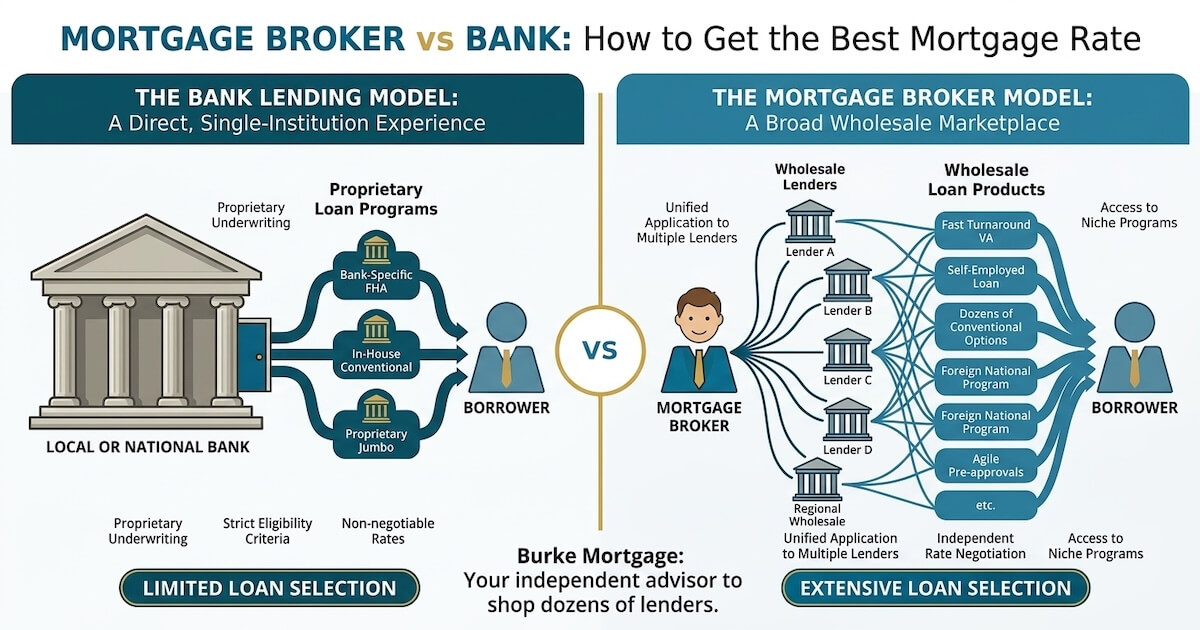
Understanding the core differences between available mortgage opportunities helps clarify which path aligns with your financial strategy. A bank provides a direct, single-institution experience with proprietary loan programs, which can be advantageous if you already hold existing accounts there. However, banks can only offer their in-house products, meaning their lending criteria, rates, and underwriting guidelines are strict and non-negotiable.
Working with a mortgage broker opens access to a broad wholesale marketplace. Instead of fitting your financial profile into one bank’s criteria, a broker evaluates products from dozens of lenders to find the right mortgage for your circumstances. The process with a broker involves a unified application where your agent handles loan shopping, rate negotiation, and administrative coordination, often providing greater flexibility for buyers with unique financial profiles or complex borrowing needs.
Mortgage Broker vs Bank: How to Get the Best Mortgage Rate
Mortgage interest rates are established through a combination of broader economic factors—such as Federal Reserve policies, inflation trends, and benchmark bond yields—alongside your individual borrower risk profile. Lenders evaluate credit scores, debt-to-income (DTI) ratios, down payment size, and employment history to calculate your specific rate. Pre-qualifying for a mortgage gives you an early estimate of your borrowing power, allowing you to establish a realistic budget before entering the market.
Local real estate dynamics and housing supply also impact mortgage selection. In competitive markets with limited inventory, buyers often need rapid pre-approval turnarounds or specialized loan types (such as conventional, FHA, VA, or jumbo loans) to make compelling offers. While a traditional bank may take longer to process complex files, an agile mortgage broker can quickly match you with lenders that offer fast turnarounds and specialized loan structures designed for tight housing markets.
Ready to Find the Right Mortgage?
Whether you are purchasing a new home, consolidating debt, or exploring refinancing opportunities, let the mortgage broker, Burke Mortgage do the research to spot the best rates and terms available that you qualify for.